I was right. It was a very lazy Christmas.
Now it's that time when DownUnder has already celebrated their rollover into the new year, and we anxiously await our turn while the arbitrary timeline zooms towards us across the globe.
I suppose it's customary to reflect upon the year that's passed, the various events that shaped 2010; there are certainly many to choose from. Vancouver Olympics. Haiti's earthquake. Assange and WikiLeaks. Justin Bieber (I still don't get this one). But I'll be honest with you folks out in cyberspace: I never have the desire to reflect upon the year just passed. Partly because my short term memory is crap.
It was just another year. We moved into our new home. Got screwed over by past roomates. We lost our dog in a violent brain tumour. Discovered a terrific couples resort. Slept. Ate. Pooped.
I'm much more interested in the year to come. Scratch that. In the day to come. In the next 24 hours. I can't do anything about the year that's passed, or where I'll be this time next year (possibly still slacking off at blogging and waxing philosophical to myself?). But I can wrap my poor tired brain around the next 24 hours. I can try and set up a nice date for my partner and me (yes that's proper grammar, bitches). Light some candles, maybe do some shopping, take our remaining dog for a walk.
I feel the idea of New Years' Resolutions is doomed to failure, because most self assertions are. I have a friend whose resolutions I always look forward to, because she eschews the self bettering, and instead goes straight to the self fulfilling. One year her resolution was to eat more melty cheese (she succeeded beautifully). Last year I believe it was to eat more ice cream (I'll have to ask how that one went).
So I propose to you this: Resolve to Be Happy, internet people. Be happy for the next 24 hours, because that's the best you can hope for. Tomorrow, resolve to Be Happy for those 24 hours. Do not compare today's Happy to tomorrow's. They are different creatures. Simply live in the Now of Happy.
Resolve to have some Happy today. Let tomorrow worry about tomorrow.
Happy New Years :)
All year round the lover is mad,
Unkempt, lovesick and in disgrace.
Without love there is nothing but grief.
In love… what else matters?
-Rumi
Friday, December 31, 2010
Wednesday, December 1, 2010
Brain Fart

I had this horribly optimistic idea that I would post every day, even if they were little ones. I would become this insanely productive writer, with a plethora of posts under my belt. I should know myself better than this by now, but I am cursed with an ever-hopeful mind. I like to think that no matter how many times a cabbie cuts me off, maybe today this cabbie won't. And yet they always do.
So Christmas is around the corner, and I have no Oomph. No Oomph to go shopping, no Oomph to decorate, no Oomph to wax pathetic on whatever issue happens to be on my mind (currently I'm passively contemplating Wikileaks, in case you're interested).
Partly I blame the tenacious bastard of a cold that will not leave me alone, sapping all my energy and klenex like a giant snotty plecostomus. I fill my time with knitting, make work projects at work (you should see the colour coordinated schedules I make), and my new-found love of Netflix. I possess an inhuman ability to absorb television. I will happily sit and watch entire seasons of various tv shows. They don't even have to be particularly good. They just have to be there.
In order to break this unhealthy cycle of knitting and tv, we're cancelling our cable. Hopefully the paranoia of breaking the cap on our internet will prevent me from consuming too much Netflix, but it's a vain hope. Since I pay for the internet and any subsequent fees incurred by consuming too much of it, any deterrent is passive in nature and easily overcome by a new knitting pattern and a bowl full of popcorn.
This is going to be a very lazy Christmas.


Friday, November 26, 2010
Post Script: Maybe a little bit of nothing?
I will admit that sometimes it's fun to make black and white statements and observe the impact. I fully gave into this by ending yesterday's rant with Edwin Starr inspiration. I also sat down this morning (coffee in hand) and re-read what I wrote and decided it needed a post script.
War may be good for absolutely nothing, but I can't reasonably say that applies to marriage also. For me, marriage carries with it heavy Christian connotations, and since I'm not a Christian and have no strong financial need to get married, it has little value to me. But obviously for the millions of people who are Christian or hold Judeo-Christian values, it would have significant meaning.
As with most thing, I think properly agreeing on a definition of things aids in its discussion. To me, the institution of marriage is standing in front of a priest and saying I Do. Even on the legality side of things, it's still heavily shaded with Christian influence (stand in front of a judge and say I Do). Where I live the laws regarding common law spouses is catching up quickly to those regarding married couples. We already to our taxes together, have our joint incomes influence each other, check all the boxes marked "common law", and if we were to have a child together, in the eyes of the law we would essentially be treated as married.
Which is why I really want to share this tidbit from that Times article:
My writing yesterday got a bit disjointed, jumping from foreign cultures to economic status and viability to child rearing. Sorry about that. So here's a succinct version of one of the things I was trying to say yesterday.
Marriage is becoming less common or popular among low income couples. Yes, the marriage industry has exploded, and the cost involved obviously plays a role -- anyone who's shopped for flowers knows that as soon as you tack on "wedding bouquet" to the name, the price triples. "The loss of decent-paying jobs that a high-school-educated man or woman could get makes it difficult for them to get and stay married," says Andrew Cherlin, Sociologist at John Hopkins University. "...people are living together because they don't have enough money to live alone, but they aren't going to get married until they have enough money." (Time magazine)
But let me suggest an alternative explanation. Andrew Cherlin in that Time article said that: "Getting married is a way to show family and friends that you have a successful personal life... It's like the ultimate merit badge." I posit to you that with the waning of Christian influence, marriage has become less important to building a committed and loving relationship with someone, and more about the status symbol it represents. For low-income couples -- and I'd say even a fair number of educated middle-class couples -- it becomes more practical to save that money in order to build that loving relationship and life together. Save for a house, children, a car, a vacation, a new fridge, etc. Relationships between educated, not particularly religious individuals no longer requires the stamp of marriage approval.
I said that marriage was good for absolutely nothing. I'm adding an addendum to that. The traditional idea of marriage is becoming no longer valid in a modern sense, unless done for personal conviction or religious reasons. Commitment and love should carry the same responsibilities and strength without the marriage moniker, and they do. More and more.
War may be good for absolutely nothing, but I can't reasonably say that applies to marriage also. For me, marriage carries with it heavy Christian connotations, and since I'm not a Christian and have no strong financial need to get married, it has little value to me. But obviously for the millions of people who are Christian or hold Judeo-Christian values, it would have significant meaning.
As with most thing, I think properly agreeing on a definition of things aids in its discussion. To me, the institution of marriage is standing in front of a priest and saying I Do. Even on the legality side of things, it's still heavily shaded with Christian influence (stand in front of a judge and say I Do). Where I live the laws regarding common law spouses is catching up quickly to those regarding married couples. We already to our taxes together, have our joint incomes influence each other, check all the boxes marked "common law", and if we were to have a child together, in the eyes of the law we would essentially be treated as married.
Which is why I really want to share this tidbit from that Times article:
Sociologists tend to believe the answers lie outside marriage. Coontz [Stephanie Coontz, marriage historian, Evergreen State College] thinks that if we changed our assumptions about alternative family arrangements and our respect for them, people would be more responsible about them. "We haven't raised our expectations of how unmarried parents will react to each other. We haven't raised our expectations of divorce or singlehood," she says. "It should not be that within marriage you owe everything and without marriage you don't owe anything. When we expect responsible behavior outside as well as inside marriage, we actually reduce the temptation to evade or escape marriage."
My writing yesterday got a bit disjointed, jumping from foreign cultures to economic status and viability to child rearing. Sorry about that. So here's a succinct version of one of the things I was trying to say yesterday.
Marriage is becoming less common or popular among low income couples. Yes, the marriage industry has exploded, and the cost involved obviously plays a role -- anyone who's shopped for flowers knows that as soon as you tack on "wedding bouquet" to the name, the price triples. "The loss of decent-paying jobs that a high-school-educated man or woman could get makes it difficult for them to get and stay married," says Andrew Cherlin, Sociologist at John Hopkins University. "...people are living together because they don't have enough money to live alone, but they aren't going to get married until they have enough money." (Time magazine)
But let me suggest an alternative explanation. Andrew Cherlin in that Time article said that: "Getting married is a way to show family and friends that you have a successful personal life... It's like the ultimate merit badge." I posit to you that with the waning of Christian influence, marriage has become less important to building a committed and loving relationship with someone, and more about the status symbol it represents. For low-income couples -- and I'd say even a fair number of educated middle-class couples -- it becomes more practical to save that money in order to build that loving relationship and life together. Save for a house, children, a car, a vacation, a new fridge, etc. Relationships between educated, not particularly religious individuals no longer requires the stamp of marriage approval.
I said that marriage was good for absolutely nothing. I'm adding an addendum to that. The traditional idea of marriage is becoming no longer valid in a modern sense, unless done for personal conviction or religious reasons. Commitment and love should carry the same responsibilities and strength without the marriage moniker, and they do. More and more.
Thursday, November 25, 2010
Absolutely nothing?
I stumbled upon Time magazine this week, and was arrested by the front cover, which loudly proclaimed: "Marriage: What's It Good For?" Which, when you stop and think about it, is an excellent question.
Of course, I have stopped to think about it, having lived with my partner for the past 5 years, and for the past year I've been sporting a solid looking diamond (they are far more sparkly in person than you would imagine). Aye, but there's a rub: We decided not to get married. Halt your rabid assumptions of betrayal and lost love, we're both perfectly happy and committed and all that jazz. But somewhere amid the frenetic planning of a wedding, the crunching of numbers that always wind up having too many zeros to sit comfortably with my bank account, we looked at each other and said: "Wait a minute. Why are we doing this again?"
Which seems to be a growing trend, according to Time magazine and the Pew Research Center. On a personal note, I'd like to think it has to do with the broadening of our definition of marriage, or what being committed and in love means, of the waning of Christian influence. All of that certainly is an element of it -- "We're just more flexible about how family gets defined," Time proclaims -- but what surprised me in this article was the parallels they drew between income and marriage.
On the dichotomy of the sexes side: "Well-off women don't need to stay in a marriage that doesn't make them happy." Which could be a rather good thing, as my partner points out, especially in cases of spousal abuse. The ongoing march of women's rights has brought this element of matriarchal independence into marriage. Women are equal partners, emotionally, sexually, and most importantly financially. I'm still working my way through Sex At Dawn (as you may recall me waxing long-windedly about) and so naturally while reading through Time I was mentally drawing all sorts of parallels between the two. What particularly leapt to mind (and had me leaping up to paw frantically through my book until I found it again) was the Mosuo of southwest China.
Briefly, Mosuo culture slants towards the matriarchal, in the sense of title, family, belonging is centered with the women. They have a unique sense of "marriage", a term I use very losely here since they, for all intents and purposes, have no marriages. Men will meander into a woman's home (invited, of course), spend the night, and leave the next morning. Sometimes these are long-term companionships, sometimes not, and any children born stay with the mother and are raised in her household.
Which brings me right back around to Time mag. They devoted some time to looking at children, and how the recent trends in marriage may or may not be affecting them. Although three quarters of those surveyed said that raising kids is "best done married", in 2008 "41% of babies were born to unmarried moms... an eightfold increase from 50 years ago, and 25% of kids lived in a single parent home, almost triple the number from 1960". It goes on to describe what is supposedly the predominant situation for unwed mothers, saying that a quarter of those who didn't marry the father had moved on to live with or marry another man. Andrew Cherlin, Sociologist at John Hopkins Univ, is quoted as saying: "About 21% of American children will see at least two live-in partners of their mothers by the time they're 15. And an additional 8% will see three or more."
For the Mosuo culture, not knowing who exactly your dad is (although many of them do, there just isn't a particular emphasis on it) has no adverse effect on the children. They have male role models in the community, in their uncles, grandfathers, older siblings. Without a possessive sense of paternity, the community as a whole loves and cares for children equally. Similar to an account of a female truck river in Polynesia (page 108 in Sex at Dawn if you're interested), who gave two of her nine children to an infertile friend, which seemed the normal, and imminently practical, thing to do. "All of us love all the children," she said.
Yes, I may be kicking an unwed horse with my nigh obssession with this book, but it's hard not to point wildly and yell AhHa! when looking at the statistics kicked up by this marriage data. The wedding industry has become bloated, and the trends point solidly towards lower-income couples not getting married while also not waiting to start a family, while higher-income couples are getting married as a show of "the ultimate merit badge" (another Cherlin quote). There's a wonderful graph showing the percentage of births outside of marriage along a timeline from the 60s until 2008. All lines point up. 41% in 2008 versus somewhere along the 5% mark in 1960. Again in the 60s, roughly 70% of American adults were married, and today that number sits somewhere south of 52%.
All signs point to the institution of marriage going the way of the dodo, and yet almost half the people surveyed said they wanted to get married (64% in the group of unmarried people living with a partner), and there's that previously cited quote saying that three quarters said having kids is best done married. "Half or more of the respondents in the Pew poll say that marital status is irrelevant to achieving respect, happiness, career goals, financial security or a fulfilling sex life. When it comes to raising kids, though, it's a landslide, with more than three-quarters saying it's best done married."
So here's this whole article, this slew of data, showing that an overwhelming number of us are eschewing marriage, while maintaining this tenacious grip on it's sanctity. The article -- after spending several pages statistically proving it's dodo-esque nature -- naively claims that "marriage is still the best avenue most people have for making their dreams dome true... not all the old traditions of marriage are obsolete."
I remain solidly unconvinced. What's marriage good for? Absolutely nothing.
Wednesday, November 24, 2010
The United Nations of WTF
I sat down to write something about an article I found in Time (which I will still write), but got sidetracked by learning that the United Nations voted to "removed “sexual orientation” from a resolution that protects people from arbitrary executions. In other words, the UN General Assembly this week voted to allow LGBT people to be executed without cause."
Oh joy.
You can read the article in its entirety over this way, which is at once disturbing and worrisome. It immediately brought to mind the slew of editorials I read after Canada lost it's bid for a UN security council seat. We've been on the council for the last 60 years, and it's been said that we lost this time around due to some of Canada's decisions being "unpopular with the international community".
There's a whole "omg the arabs are taking over the UN" panic side to this story, which I won't touch with a ten foot pole at this time, but at a basic level it seems that to a certain degree it's wise to have "unpopular" opinions around, to force you to question decisions, policy, ideas, votes... you get the idea.
Like the majority vote to give "a de facto green light to the on-going murder of LGBT people by homophobic regimes, death squads and vigilantes."
Monday, November 15, 2010
Anxietas Redux

Ola, mi amigos.
Yes, I went and disappeared. That happens sometimes. I took a few days off work, and took some time to realign my chi.
Alright, actually my chi feels horribly out of alignment, but I'm working on that. Since I was purposefully ignoring work for a few days, I'm completely out of the loop in terms of exciting new media events and stories. So I would love to offer unique insight into the latest buzz, but my buzz is more of a pathetic honking noise.
In truth, my mind has been pre-occupied with two things: Mental Health and Dogs.
Mental Health because I've been struggling with being off my medications (there is no possible way to say that and not sound koo-koo) and getting my ducks in order to return to school and finish my Psychology degree. It has been suggested that I am indeed koo-koo to attempt work and school and managing an anxiety/panic disorder at the same time, but nothing risked nothing gained. Except possibly peace and quiet. One would imagine that if you didn't risk anything, you'd enjoy a pleasant life of peace and quiet.
Dogs because the hubby and I have been shopping around for a new dog. The loss of our shepherd Mandy was devastating in its abrupt violence, so the journey towards deciding we were ready for another dog and the ongoing pursuit of finding the right dog has been emotional, at best. Both Mandy and Sunny (who is still with us and coping poorly with the loss of her companion) found their humans; we were, respectively, not looking for a dog. They simply made their way into our lives. So actively searching for a new dog to enter our life has been... difficult.
But life trucks on.
Monday, November 1, 2010
The Sexual Narrative - Part 3
Okay, let's bring this all back around.
I've waxed long and hard about large concepts involving the evolutionary tree of mankind. Societal influences and cultural narratives. Why, oh why, am I doing this?
My large point, and one I've harped on for a few years now, is that we (as a society) do not talk about sex enough. When we do talk about sex, it's largely biological in nature, images of static diagrams in highschool sex ed classes. Urethra. Ovaries. Prostate.
We are bombarded with images of sexuality (see: beer commercials) and the sexualization of people at younger and younger ages (see: kids beauty pangeants) and yet there's no real discussion about the reality of sex. The full reality of sex. The biological, the emotional, the societal, the cultural. Sex at Dawn does an amazing job at looking at why our culture has evolved the sexual taboos it has, why our sexual narrative has played out in this particular way, and how it relates to our current sexual world.
I took an amazing class in university on human sexuality. At one point, our teacher showed images from various text books regarding the human body, the sexy bits in particular. She asked the class if any of the images of the various vulvas looked anything like the real deal. (Note that I didn't use the word vagina. Vulva is the outside bits, vagina is the inside bit that you can't see without a speculum or a camera. Mistake #1 in almost all textbooks). The consensus was a giggling no. She then showed us the art of Georgia O'Keefe. Seriously, go google images Georgia O'Keefe and tell me that her flowers aren't just a wee bit erotic. They certainly did a better job of conveying the reality and variety of vulvas better than any of the textbooks we had did. (And they're just paintings of flowers, so totally work safe).
We're terrified of talking about the reality of sex, but we're obsessed with it. As well we should be, it's a major social bonding medium. I call shenanigans that sex is for reproduction. For the majority of the animal kingdom it is, but primates are unique in their enjoyment of sex. There's a reason we enjoy it. Yet heaven forbid we talk about how good it feels.
Let me just quote some fairly stunning numbers that made me laugh out loud from Sex at Dawn:
You may not agree with the ideas set forth in Sex at Dawn. You may not be comfortable talking about sex. The church wasn't too comfortable talking about the earth moving around the sun in it's spherical shape. To me, I think the evidence is piling up that our sexual narrative isn't working for us anymore.
I'm of the firm opinion that dialog is good. It's about damn time we had some serious, open dialog regarding sex.
I've waxed long and hard about large concepts involving the evolutionary tree of mankind. Societal influences and cultural narratives. Why, oh why, am I doing this?
My large point, and one I've harped on for a few years now, is that we (as a society) do not talk about sex enough. When we do talk about sex, it's largely biological in nature, images of static diagrams in highschool sex ed classes. Urethra. Ovaries. Prostate.
We are bombarded with images of sexuality (see: beer commercials) and the sexualization of people at younger and younger ages (see: kids beauty pangeants) and yet there's no real discussion about the reality of sex. The full reality of sex. The biological, the emotional, the societal, the cultural. Sex at Dawn does an amazing job at looking at why our culture has evolved the sexual taboos it has, why our sexual narrative has played out in this particular way, and how it relates to our current sexual world.
I took an amazing class in university on human sexuality. At one point, our teacher showed images from various text books regarding the human body, the sexy bits in particular. She asked the class if any of the images of the various vulvas looked anything like the real deal. (Note that I didn't use the word vagina. Vulva is the outside bits, vagina is the inside bit that you can't see without a speculum or a camera. Mistake #1 in almost all textbooks). The consensus was a giggling no. She then showed us the art of Georgia O'Keefe. Seriously, go google images Georgia O'Keefe and tell me that her flowers aren't just a wee bit erotic. They certainly did a better job of conveying the reality and variety of vulvas better than any of the textbooks we had did. (And they're just paintings of flowers, so totally work safe).
We're terrified of talking about the reality of sex, but we're obsessed with it. As well we should be, it's a major social bonding medium. I call shenanigans that sex is for reproduction. For the majority of the animal kingdom it is, but primates are unique in their enjoyment of sex. There's a reason we enjoy it. Yet heaven forbid we talk about how good it feels.
Let me just quote some fairly stunning numbers that made me laugh out loud from Sex at Dawn:
The American Medical Association reports that some 42 percent of American women suffer from sexual dysfunction, while Viagra breaks sales records year after year. Worldwide, pornography is reported to rake in anywhere form fifty-seven billion to a hundred billion dollars annually. In the United States, it generates more revenue than CBS, NBC, and ABC combined and more than all professional football, baseball, and basketball franchises. According to U.S News and World Report, "Americans spend more money at strip clubs than at Broadway, off-Broadway, regional and nonprofit theatres, the opera, the ballet and jazz and classical music performances--combined." ... This split-personality relationship with our true sexual nature is anything but news to entertainment corporations, who have long reflected the same fractured sensibility between public pronouncement and private desire. In 2000, under the headline "Wall Street Meets Pornography," The New York Times reported that General Motors sold more graphic sex films than Larry Flynt, owner of the Hustler empire. Over eight million American subscribers to DirecTV, a General Motors subsidiary, were spending about $200 million a year on pay-per-view sex films from satellite providers. Similarly, Rupert Murdoch, owner of the Fox News Network and the nation's leading conservative newspaper, The Wall Street Journal, was pulling in more porn money through a satellite company than Playboy made with its magazine, cable, and Internet businesses combined. AT&T, also a supported of conservative values, sells hard-core porn to over a million hotel rooms throughout the country via its Hot Network.If the sexual narrative we are currently living out is "how it's suppose to be", why are divorce rates rising, marriage rates declining, and the prevalence of mates seeking sexual satisfaction outside of this supposedly natural "central family unit" obviously so high?
You may not agree with the ideas set forth in Sex at Dawn. You may not be comfortable talking about sex. The church wasn't too comfortable talking about the earth moving around the sun in it's spherical shape. To me, I think the evidence is piling up that our sexual narrative isn't working for us anymore.
I'm of the firm opinion that dialog is good. It's about damn time we had some serious, open dialog regarding sex.
The Sexual Narrative - Part 2
The entire idea that our society and culture has gone askew has so many far reaching tendrils. A few posts ago I alluded to the fact that I was pondering big things, and mentioned Gaia Theory but never followed up on it. The reason being that the idea that our entire culture is... wrong, for lack of a better word, is so large and unwieldy that although I am intrigued, I am willing to accept that, I am interested in how to change that, it remains difficult to wrap my head around and put it down on paper. There is no spoon. Woah.
Ishmael posited the idea that we used to live, when we were nomadic hunter-gatherers, as if we "belonged to the world", we were the Children of Gaia (forgive my waxing hippieness), and lived in this symbiotic relationship with the world as a whole. Gaia Theory is the idea that everything is interconnected in a giant symbiotic relationship encompassing every element on Earth in order to sustain a state of homeorhesis, not to be confused with homeostasis. (Homeostasis: properties of a system to regulate its environment to maintain a stable, constant state. Homeorhesis: properties of a system to regulate its environment around a trajectory. Elements working in cohesion to maintain certain static points, but those points will change depending on various elements).
Confused yet? Stay with me. Daniel Quinn and Gaia Theory (the brain child of James Lovelock) have nothing to do with each other as far as I know, but I can't help but love the complementary nature of their ideas. That we used to "belong to the earth" and we lived in this giant symbiotic, fluctuating eco-balance. That when tracing our evolution, we ceased to belong to the earth and began to think the earth belonged to us. Now we have domesticated animals, and crops, and property, and therefore I must own what is mine in order to protect what is mine. And protect what is mine in order to own it.
I began this whole rant because of Sex at Dawn, and we may seemed to have strayed from our original path which was the current sexual narrative but trust me, it was only a minor detour.
Sex at Dawn also traces our cultural past to the Neolithic Revolution (remember, the agricultural revolution) and this huge societal shift from hunter-gatherer to domesticated settler. The traditional idea surrounding the interplay of the sexes was that men need to protect their paternal rights, so they want exclusive access to the female so they can assure their offspring is theirs. Women need to trade their reproductive capability for security and food that men offer. So it's this constant monogamous byplay of horny man versus reluctant woman. Men want sex, potentially lots of it with many women to ensure their genes get passed on. Women don't want to trade sex for someone who isn't going to stick around and take care of their pregnant selves and their offspring.
This was Darwin's idea (and others) when he was doing his whole evolution song and dance, and it largely hasn't changed in the intervening years. This book says wait a second. Is that actually how we evolved? Is that our true origins, or is that the culture in which we live projecting it's own taboos upon history?
When the British first started wandering around Australia, they reported that the Aborigines were miserable and starving, in a state of chronic famine. Why? Because they saw them eating bugs, rats, grubs, etc. To the Brits with their tea and crumpets, eating bugs was a last resort of a starving man. To the Aborigines, it was an excellent source of protein and part of their daily diet. They weren't starving or miserable. Has man always lived in a state of tense monogamy, of gender inequality and byplay, or do we assume that because that's how we've lived for the last two thousand years?
Remember, we weren't always sedentary. Our nomadic ancestors lived in a state of "belonging to the earth". Due to the nomadic lifestyle, our population was kept in check by the availability of food. You didn't store food or possess many things, because you took with you what you could carry. Instead of individual owning rights -- this is my property, my home, my crop -- man lived in bands of nomads who shared because that was the best way to ensure the survival of yourself and your band. You did not own anything that your tribemate did not also own or have access to. If they shared everything, why wouldn't they have shared sex? Without land to pass on to offspring, the knowledge of paternity loses importance. The raising of children was a communal affair. The best way to pass on your genes as a man would be to regularly screw all the women in your tribe. And the woman didn't have to worry about being left starving and pregnant, because the band would take care of her and her offspring. With the availability of food and the culture of sharing, women weren't dependent on men, they were equal members of the nomadic tribe.
Is this starting to make sense now?
To be continued...
The Sexual Narrative - Part 1
I had intended to pick up and talk about the Rally to Restore Sanity and/or Fear which went on this weekend -- since I am, naturally, a Stewart/Colbert fan -- but I've been reading this book which has dominated the last few days and so I can't help but want to wax philosophical at it. (Also, I'm desperately trying to avoid ranting about Glenn Beck, Fox News, and the state of modern media because, let's face it, nothing good will come of that).
I'm going to warn you right now, you're going to have to bear with me because I'm kind of writing this off the cuff. I had intended to be a good little researcher and actually finish my book before talking about it, but I got excited and am prematurely spewing my opinion.
The book is called Sex at Dawn, and is not a guide to how to get freaky in the bedroom. Written by Christopher Ryan Ph.D. and Cacilda Jethá, M.D. (who both have extensive and interesting backgrounds), their website describes the book as showing "how our promiscuous past haunts our current struggles regarding monogamy, sexual orientation, and family dynamics." I have to give credit where credit's due, I wouldn't be reading this book right now if it wasn't for listening to Dan Savage's podcast where he had Christopher Ryan on as a guest. I recommend listening to it for an interesting discussion and dynamic... I would double check which podcast it was and link it directly for you folks, but the government blocks his website. You can't see me, but I'm rolling my eyes and muttering about censorship under my breath.
I'm going to take a quick step back here, and potentially do this whole post in more than one part as I get increasingly long winded. When I was in highschool and feeling idealistically young and full of save-the-world energy, I read a book called Ishmael by Daniel Quinn. It was one of those books that changed my outlook from then and largely helped shaped my current views on my world and my place on it. (Note: that link is to the Wiki entry for the book, and should come with a giant spoiler alert sign since it gives the entire breakdown of the story. The author's website is here if you're interested). Ishmael asked an immediate question that I think all teenagers can relate to, and most adults if they really stop and think about it: What the hell is wrong with the world? I'm over simplifying it. It's a book based on the assumption that we feel there is something innately wrong with how things are turning out, and it traces back man's societal and cultural development to track down the place where we took a wrong turn.
At the risk of giving it all away (trust me, read the book, the journal is worth as much as the answer), the central premise is that with the advent of agriculture, with man kind turning from hunter-gatherers to animal domestication and sedentary societies, it fundamentally changed our society, destroyed the previous "tribal groupings" and that this change is not for the better. The societal change that came from now being a sedentary culture meant that although we have more control over our food supply, our mentality regarding the possessive nature of our food supply had to change. You no longer shared with your tribe-mates, you bartered with your neighbours. More stable food supply led to population explosions, increasing disease and shorter life expectancy. Owning land led to wanting more land led to warring with your neighbour to take his land. Matriarchal hierarchies gave way to patriarchal ones and the subservience of women who now had to barter their bodies for the land, food and protection of the controlling male class.
I'm skipping along past all the proofs for the above claims. I'm not about to re-write both books here, so if you would like the in-depth account of where all these claims are coming from, read the books and read the footnotes found in the books.
The reason I'm laying out these theories regarding man's development going back to the Neolithic Revolution (ie, the agricultural revolution) is because Sex at Dawn takes the same stance that Ishmael does, but in regards to human sexuality. They look at the current story being told about human sexuality, the accepted narrative of why our sexuality is the way it is and why men and women are the way they are, and conclude that it doesn't compute.
It made me want to cheer out loud. Sex has been my focus of study for the last few years as I waned in and out of school, and I've been of the stoic opinion that our current sexual narrative is woefully lacking. What is taught in schools is pathetic. The lack of real, actual, useful and true information is embarrassingly deficient. Human sexuality is an omnipresent fact of life, and yet the discussions surrounding it are hush-hushed, the information is tightly controlled and editted for "respectability", the taboo is alive and thriving.
A 13 year old can go into a movie theatre and watch someone be brutally chopped to bits, but heaven forbid there's a penis on screen.
To be continued...
Thursday, October 28, 2010
Stomach Flu & Dorking Out
Apologies for my prolonged absence from my soapbox. I was not so happily engaged in reacquainting myself with my toilet, sink, garbage can... pretty much whatever receptacle was near at hand while I lost the contents of my stomach over and over.
Enjoy that mental image.
I have now successfully kept food down for 24 hours, so I'm declaring myself cured and attempting to reintegrate myself into the food consuming public. Fingers crossed I don't pass out in kickboxing tonight due to lack of nutrients.
During my prolonged illness, I took the time to ensconce myself on the couch with Fable III. I know I wax poetically political on here, but the truth is I enjoy a large amount of dorkitude in my daily life. I couldn't not sneak a peak at Scott Stinson's editorial today about the duality of Darth Vader vs Anakin Skywalker. I often catch one of the various Star Trek's mid-afternoon while I eat lunch, and I'm still happily playing my way through Dragon Age for the umpteenth time (I'll actually beat the game one of these days, but systematically seducing everyone in your party takes time).
I've played through Fable I and II, and was awaiting Fable III when my ingenious hubby surprised me with it early (it's a birthday present a month early... the fact that I'm awful at keeping track of release dates makes it very easy to surprise me with new games). Now, this could very well be the fact that my gameplay was interrupted by sporadic vomiting, but my first immediate reaction was that it didn't gather me in like the first two did. Beginning Fable I as a small boy, with small boy quests, and subsequently following him to adulthood drew you in to the character and his immediate world. Starting Fable II again as a child (an orphan in both cases, although I liked that you could pick your gender in the sequel) and working towards earning this mystical music box in a very pre-industrial setting was fun. Part of the quest line has you rescue a dog, who becomes your faithful treasure finding companion (I don't remembering Fable I having a dog, but it's been a while). Both times you have tradgedy strike your poor orphan world, and you feel sympathy for your poor orphan character.
Fable III starts you off at the complete other end of the spectrum. Instead of an orphan, you're a privileged prince/princess, who already owns a dog, and seems to have everything going for her (him). You already seem to have a love interest (at least as the princess you do). You have a freaking butler who gets you out of bed. I completely lost that sense of connection and sympathy for the plight of the poor struggling hero. There was no reason to feel connected or empathic towards this privileged person. Where's my dirty little orphan child over coming adversity?
The new setting is amid Albion's industrial revolution, with a sort of French Rebellion vibe brewing. The reason being that your brother is a right ass with an uncaring deathgrip on the nation, keeping the little man dirty and in unsafe working conditions. Within the first hour or two of gameplay, you're expected to hate your brother for being a tyrant and betray him, setting yourself up as pretender to the throne. You have two older companions (your butler and your weapons teacher) telling you how awesome you are and that you're obviously the hero that Albion needs.
Woah woah woah. Slow this boat down. I just woke up, my brother is executing people, and now I'm a hero? I already wasn't feeling particularly enamored with this character. Now it just feels like I've become this young puppet for these two older gents who want to overthrow my brother. And where the hell did this damn dog come from?
The first two games had these very clear Big Baddies for you to fight. Both were figures of authority, which fit well with you as an orphan to rebel against. Jack of Blades, who is behind the destruction of your home in the first one. And Lord Lucien who kills your big sister in the second. Jack of Blades and Lord Lucien. Great bad guy names. They screw with your family, so of course you have to take them down. Suddenly, the third one veers wildly to the left, and the tyrant (still what was a decent bad guy name, Logan, but now due to pop-culture only makes me think of Wolverine) is your family, your own brother!
Now, I'm only a few hours into play. Maybe I'm judging too hastily, and it'll get better. I hear the second half of Fable III has you ruling the kingdom. Whereas the first two games ended when you got the throne (or beat the bad guy, rather), this one continues on after you win the rebellion and you have to make decisions as Albion's ruler. So obviously they're trying something new with the storyline and gameplay on this one. But the complete lack of set-up in drawing you into your own character has me feeling lackluster about this latest installment.
Oh, and you use the freaking A button for everything. The number of times I've tried to open chests and instead wound up playing fetch with the damn dog...
Thursday, October 21, 2010
Leave No Man's Behind
"Another thing when I'm president? If you're in the army, the navy, any branch of the armed forces... you can fuck whoever you want!"
-Denis Leary, "Lock 'N Load"
-Denis Leary, "Lock 'N Load"
I've been sitting at my desk for a few hours now, and in between working I've been reading and thinking about the whole Don't Ask Don't Tell policy in the U.S. military.
Obama has been vocally opposed to the DADT policy, saying it's unconstitutional, and some federal court judges have backed him up on that. In a bizarre twist of WTF, the Department of Justice has appealed to have it reinstated, saying it's duty bound to defend the laws so long as there's an argument to be made. Or something to that effect.
Honestly, I've been reading stories about this all morning, and the amount of back and forth political and judicial mumbo-jumbo has my head spinning. The actual question of discrimination and truth and personal rights seems to be buried under the question of who can appeal what, who should be appealing what and for which reason, and who is simply pulling some crazy political angle. I'm dizzy.
I debated even wading into this quagmire because my understanding of the American judicial system is squat. And I'm not American. Nor am I in the military. Or gay. I'm pretty much the antithesis of who should be voicing an opinion on this matter. Which brings me nicely to a point that struck me amid all this back and forth. I haven't read every single news story available, but the major ones that I have read seem to have expert comments from judges, policy experts, military experts, high ranking military officials... but no actively serving gay military personnel. (Author's Note: for the sake of brevity, I'm going to use the term gay from here on out, but mentally add in lesbian, transgendered, bisexual in there. It's just easier and more sentence friendly than typing LGBT everytime.)
With the exception of Dan Choi, who's received some publicity for being booted out in July for being gay and subsequently trying to reinlist recently amid all this policy hooplah, the majority of "It works, don't change it" comments are coming from serving military personnel who are not gay. Although, to play devil's advocate to myself, maybe they are but won't say anything because they'll get kicked out. Or stabbed in their sleep.
The arguments in favour of keeping the DADT policy in place seem to be largely centered around the dire warnings of "enormous consequences" for the military and morale. The BBC reported last week that: "the Pentagon has been studying how gay people can be integrated into the US military and is to report on its findings on 1 December." Which seems on the strange side since gay people do not need to be integrated, given that they are already there. Seems it would be a better use of time and resources to instead work on integrated the bigoted masses towards an equal human rights military. Military gay people obviously don't have a problem being in the military, except when other people have a problem with them being there.
It's such an awkward law that the military cannot legally ask someone their orientation, but if it is found out they can happily expel you for it. To use a simplistic analogy, imagine that there was a race of people who had giant birth marks. You can't ask someone to take off their shirt and prove they aren't a Birthmarker, but if you catch someone with it you can expel them from serving their country. The futile senselessness of it makes me want to scream.
In Canada, it's been A-OK to be gay in the military since 1992. So 18 years later, and our military hasn't broken down into an un-cohesive blog of useless... at least not due to sexual orientation, but that's another story.
In my back pocket here, I managed to dig up a study conducted by the Palm Center, a research institute based out of California, entitled "Effects of the 1992 Lifting of Restrictions on Gay and Lesbian Service in the Canadian Forces; Appraising the Evidence".
Seems like amid all this current Don't Ask Don't Tell debate, someone should be bringing this study up as a shining example that the sky will not fall down if gays are allowed to openly serve their country. I'll polish this off with their key findings, and let you know decide on your own.
- Lifting of restrictions on gay and lesbian service in the Canadian Forces has not led to any change in military performance, unit cohesion, or discipline.
- Self-identified gay, lesbian, and transsexual members of the Canadian Forces contacted for the study describe good working relationships with peers.
- The percent of military women who experienced sexual harassment dropped 46% after the ban was lifted. While there were several reasons why harassment declined, one factor was that after the ban was lifted women were free to report assaults without fear that they would be accused of being a lesbian.
- Before
Canada - None of the 905 assault cases in the Canadian Forces from November, 1992 (when the ban was lifted) until August, 1995 involved gay bashing or could be attributed to the sexual orientation of one of the parties.
Oh Snap!

I actually wooped out loud when I read last week's Savage Love. And so I share.
In Your Image
October 14, 2010
By Dan Savage
In Your Image
October 14, 2010
By Dan Savage
I heard an interview with you about your It Gets Better campaign. I was saddened and frustrated with your comments regarding people of faith and their perpetuation of bullying. As someone who loves the Lord and does not support gay marriage, I can honestly say I was heartbroken to hear about the young man who took his own life.
If your message is that we should not judge people based on their sexual preference, how do you justify judging entire groups of people for any other reason (including their faith)? There is no part of me that took any pleasure in what happened to that young man.
To that end, to imply that I would somehow encourage my children to mock, hurt, or intimidate another person for any reason is completely unfounded and offensive. Being a follower of Christ is, above all things, a recognition that we are all imperfect, fallible, and in desperate need of a savior. We cannot believe that we are better or more worthy than other people.
Please consider your viewpoint, and please be more careful with your words in the future.
L.R.
I'm sorry your feelings were hurt by my comments.
No, wait. I'm not. Gay kids are dying. So let's try to keep things in perspective: Fuck your feelings.
A question: Do you "support" atheist marriage? Interfaith marriage? Divorce and remarriage? All are legal, all go against Christian and/or traditional ideas about marriage, and yet there's no "Christian" movement to deny marriage rights to atheists or people marrying outside their respective faiths or people divorcing and remarrying. Why the hell not?
Sorry, L.R., but so long as you support the denial of marriage rights to same-sex couples, it's clear that you do believe that some people—straight people—are "better or more worthy" than others.
And—sorry—but you are partly responsible for the bullying and physical violence being visited on vulnerable LGBT children. The kids of people who see gay people as sinful or damaged or disordered and unworthy of full civil equality—even if those people strive to express their bigotry in the politest possible way (at least when they happen to be addressing a gay person)—learn to see gay people as sinful, damaged, disordered, and unworthy. And while there may not be any gay adults or couples where you live, or at your church, or in your workplace, I promise you that there are gay and lesbian children in your schools. And while you can only attack gays and lesbians at the ballot box, nice and impersonally, your children have the option of attacking actual gays and lesbians, in person, in real time.
Real gay and lesbian children. Not political abstractions, not "sinners." Gay and lesbian children.
Try to keep up: The dehumanizing bigotries that fall from the lips of "faithful Christians," and the lies about us that vomit out from the pulpits of churches that "faithful Christians" drag their kids to on Sundays, give your children license to verbally abuse, humiliate, and condemn the gay children they encounter at school. And many of your children—having listened to Mom and Dad talk about how gay marriage is a threat to family and how gay sex makes their magic sky friend Jesus cry—feel justified in physically abusing the LGBT children they encounter in their schools. You don't have to explicitly "encourage [your] children to mock, hurt, or intimidate" queer kids. Your encouragement—along with your hatred and fear—is implicit. It's here, it's clear, and we're seeing the fruits of it: dead children.
Oh, and those same dehumanizing bigotries that fill your straight children with hate? They fill your gay children with suicidal despair. And you have the nerve to ask me to be more careful with my words?
Did that hurt to hear? Good. But it couldn't have hurt nearly as much as what was said and done to Asher Brown and Justin Aaberg and Billy Lucas and Cody Barker and Seth Walsh—day in, day out for years—at schools filled with bigoted little monsters created not in the image of a loving God, but in the image of the hateful and false "followers of Christ" they call Mom and Dad.
Wednesday, October 20, 2010
Lingerie and Murder?
I've been trying to wrap my brain around something I was going to talk about, but I'm at this impass where I'm interested, not educated enough, and mildly worried I'll come across as a nut job.
If this has peaked your curiosity, let's just say I've been doing some research on James Lovelock, and leave it there for now.
In other news, crazy psychopathic murdering raping army colonel. WTF.
Working inundated with news, as I am, it's pretty hard not to listen, read, and engage in the buzz Russell Williams' arrest has made. The variety of bizarre details attached to this story just makes for sensational reading.
Personally, my psychologists curiosity is totally humming. I'd love to get my hands on his psych profile. I had an amazing psychopathology (and criminal psychology) course with a great teacher (Philip Firestone) and although I readily realize my own limitations and unability to work in that field, it's difficult not to be facinated. The how and why a brain "goes wrong" is just... mind boggling.
I keep trying to read through all the sensationalist crap and dig into details of his life, but the news is (naturally) biased. Although I'm not convinced his cross dressing and underwear stealing is really at the heart of the violence and murder, it makes for far better reading.
Hmmm. I will percolate and hopefuly write something with more substance later.
Monday, October 18, 2010
Gone to Pot
The cumulative effects of sleepiness, the tail end of a cold, the soreness of kickboxing, Monday morning, and being woken up by an elbow to the face at 3am, have all conspired to making me feel hung over without the previous night's enjoyment to show for it.
So it seems fitting that I was sitting here with my coffee reading a Globe & Mail article about California's bid to legalize marijuana. Written by an Australian professor, published in a Canadian newspaper. What a globalized world we have become...
I could go and dig up studies and anecdotes, but let's just take a step back and look at some of the classic arguments made in this article. I would like to state that although I've always been pro-legalization, I am not pro-usage necessarily. I personally treat it like alcohol. If it's legal, then it's mainstream, it's talked about, it's regulated, and when people get in over their heads, help is more readily available, instead of being available but taboo.
I can completely see a surge in usage immediately following a legalization ruling. It's new a shiney! But it's already available to underage users, and there's no data correlating legal usage to more usage in adults.
I've encountered this strange idea that it's completely wrong to drink and drive, but ok to blaze and zoom. There's so much information out there as to the dangers of alcohol usage -- I remember being bombarded in highschool with it -- that I'd like to see weed be legalized and have the same kind of campaign behind it.
Plus, let's be honest. As soon as you tell someone not to think about pink elephants, they think about pink elephants. If you tell a kid they can't have a cookie, then having that cookie is a matter worthy of a full blown temper tantrum. Remove the taboo allure, and all you have left is a recreational good time with potential pitfalls.
Everything in moderation.
So it seems fitting that I was sitting here with my coffee reading a Globe & Mail article about California's bid to legalize marijuana. Written by an Australian professor, published in a Canadian newspaper. What a globalized world we have become...
I could go and dig up studies and anecdotes, but let's just take a step back and look at some of the classic arguments made in this article. I would like to state that although I've always been pro-legalization, I am not pro-usage necessarily. I personally treat it like alcohol. If it's legal, then it's mainstream, it's talked about, it's regulated, and when people get in over their heads, help is more readily available, instead of being available but taboo.
"...broad predictions can be made. First, openly tolerating a market in a previously illegal commodity will expand the number of users, especially if the retail price is lower than the black-market price (as is proposed in the California bill). Experience with alcohol suggests that marijuana will be available to underage users, whatever the minimum legal age. This probably means more use by more young people, and probably more daily use later into adulthood."There's a smattering of conditional language in there. Predictions "can be made", "suggests" something will happen, "probably means". I can't really fault the man for being academically hedging, since it's true that you cannot predict something will happen with absolute certainty. Still, the thing that kept striking me is: Will the usage expand in comparison with the current usage, or will it just be more visible?
I can completely see a surge in usage immediately following a legalization ruling. It's new a shiney! But it's already available to underage users, and there's no data correlating legal usage to more usage in adults.
"If current estimates are correct, around 10 per cent of users may become dependent on marijuana. Only a minority of these problem users will seek professional help to quit. Dependent marijuana users are more likely to experience road and workplace accidents, impaired performance, increased respiratory disease and exacerbations of some serious mental disorders."If you smoke up while driving a forklift, I would completely agree that you're more likely to experience a workplace accident. But are these current estimates based on the current trend of usage in already existing pot smokers? If 10% of pot users, regardless of legalization, become dependent, then I don't see that number changing just because it's legal. What I can see happening is wider available help being accessible to addicts. I can see the mythos that pot is a "non-addictive" drug being shattered, and that leading to better social understanding as to the potential dangers of pot use.
I've encountered this strange idea that it's completely wrong to drink and drive, but ok to blaze and zoom. There's so much information out there as to the dangers of alcohol usage -- I remember being bombarded in highschool with it -- that I'd like to see weed be legalized and have the same kind of campaign behind it.
Plus, let's be honest. As soon as you tell someone not to think about pink elephants, they think about pink elephants. If you tell a kid they can't have a cookie, then having that cookie is a matter worthy of a full blown temper tantrum. Remove the taboo allure, and all you have left is a recreational good time with potential pitfalls.
Everything in moderation.
Friday, October 15, 2010
Fair to Middlin'

I'll be honest, I have a stinking headache and no love for politics at the moment. So now for something completely different.
I have great respect for the creative spirit. I have no musical talent myself, but I've been writing since I could hold a pen. Or I used to write before I took these fun little pills that mellow out the brain and dull the senses.
Which brings me to where my brain is these days, which is thinking about the brain. In another life I would have happily gone into neuropsychology.
Wait that's not where I was going with that. Creativity. Right.
Hawksley Workman is one of the best artists in existence, in my opinion. I don't like every single one of his songs with fangirl obssession, but I do like many of them and you can't deny that the man has oodles of raw talent and the knowledge to craft it into something amazing. I've seen him on concert twice. Worth it.
I have a deep seeded love for the photography of Ansel Adams. There's a whole history there with my father the photographer, so let's just say that my love of the artistic form was born looking at black and white vistas.
Recently, I discovered Alex Cornish, and really recommend you listen to The Shame.
For any child that ever stared at the cover of the fantasy book they lovingly clung to, rapidly devouring each page, Frank Franzetta is a must.
And whenever I want to laugh, I watch Ingrid Michaelson being silly.
I know there's more, but I'm sleepy.
To be continued...
Wednesday, October 13, 2010
When it rains, It pours
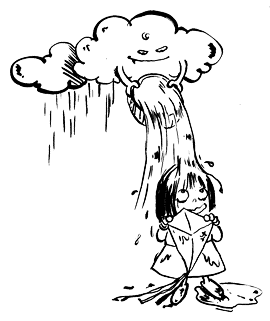
After a desert of news, suddenly it's monsoon season.
Economic Update
Blah blah, I work for Finance. Not saying boo. Go look it up yourselves.
Chilean Miners.
WOO HOO!
Honestly, talk about human perseverance. Trapped down there since August 5th. I have to say, even now I have goosebumps thinking about that little note attached to the end of a probe, just saying "All 33 of us are well inside the shelter". 17 days after the initial collapse. Goosebumps.
I know they're being proclaimed heroes, which seems a bit skewed since they didn't choose to be trapped in a mine for 69 days. So maybe heroes isn't the right word. Tenacious. That men took charge and kept them together, organized into three teams that did rotated shift work so keep their bodies and minds occupied. That's some serious leadership, tenacity, strength and fortitude.
As I'm sitting here typing away happily above ground, half of them have safely come out from their Tartaran womb. Here's hoping the rest emerge as smoothly.
UN, 1. Canada, 0.
So we didn't get in. Canada, for the first time in roughly 60 years, is not on the United Nations Security Council, and the mud is flying over this one. Do we blame Iggy? Do we blame Harper? Do we proclaim ourselves happy, cause we didn't want to be part of their birthday party anyway?
That last feels like a little bit of a backpedal with a side of saving-face, but might not be too far off base. I think we can all agree that blaming Iggy is downright ridiculous. He may have urge Canadians to question whether or not we've earned a place at the UN, but unless you actually believe that our opposition party has so much influence on the world forum to sway other countries' policies (insert eyeroll here) and I think we can all thank John Ivison for helpfully pointing out: "This explanation will work for those people who want to think the worst of the Liberal leader, no matter how implausible the story. For those of a more reflective nature, no matter how thin you slice it, it’s baloney."
We could totally blame Harper, since it's his foreign policy that got us into this mess for the good or the bad of it, but I haven't had the time to brush up on our latest international blunders so let's move on.
There has been ongoing criticism surrounding the current state of the UN, which isn't surprising when you take any global body of countries, get them all in the same room and then try to agree on anything. It's more recent criticism happens to be over the whole Israel - Palestinian shebang.
Now, the middle east is a whole can of worms that I am willing to admit completely outdistances me. I am not qualified to offer an opinion. I also read Exodus as a young, impressionable mind, so I'm slightly biased based solely on literary love.
But I do read other people's opinions (that's actually my job). And Kelly McParland turns a well fashioned phrase when he says:
Now, I'm not anti-muslim. I'm not anti-religion. (I am an ex-religion major, before I realized that outside of academia my chances for employment were slim to nil). But in the same way that you never bring up politics at a dinner party, it seems to me a little counter-productive to have a delegation based solely on religious background have a permanent presence, and outrageous influence, over an organization whose stated purpose is cooperation and world peace.
Religion and World Peace? Oil and Water? Oh, oops, maybe I shouldn't bring up oil amid all this middle east muslim talk.
Alright, let's bring this back around since I strayed far afield.
Canada didn't win it's UN seat. Boo-freaking-hoo. It did so due to the fact that it's foreign policies and international relations didn't jive with what the current incarnation of the UN is looking for. If we're comfortable with our foreign policies, then let's give the UN the middle finger (politely, we don't want to get bombed) and get on with it.
If we have problems with our foreign policy, let's negate or criticize it based on it's own merits, not on the merits of how popular it's going to make us.
We're Canada. Everyone loves us anyway.
Economic Update
Blah blah, I work for Finance. Not saying boo. Go look it up yourselves.
Chilean Miners.
WOO HOO!
Honestly, talk about human perseverance. Trapped down there since August 5th. I have to say, even now I have goosebumps thinking about that little note attached to the end of a probe, just saying "All 33 of us are well inside the shelter". 17 days after the initial collapse. Goosebumps.
I know they're being proclaimed heroes, which seems a bit skewed since they didn't choose to be trapped in a mine for 69 days. So maybe heroes isn't the right word. Tenacious. That men took charge and kept them together, organized into three teams that did rotated shift work so keep their bodies and minds occupied. That's some serious leadership, tenacity, strength and fortitude.
As I'm sitting here typing away happily above ground, half of them have safely come out from their Tartaran womb. Here's hoping the rest emerge as smoothly.
UN, 1. Canada, 0.
So we didn't get in. Canada, for the first time in roughly 60 years, is not on the United Nations Security Council, and the mud is flying over this one. Do we blame Iggy? Do we blame Harper? Do we proclaim ourselves happy, cause we didn't want to be part of their birthday party anyway?
That last feels like a little bit of a backpedal with a side of saving-face, but might not be too far off base. I think we can all agree that blaming Iggy is downright ridiculous. He may have urge Canadians to question whether or not we've earned a place at the UN, but unless you actually believe that our opposition party has so much influence on the world forum to sway other countries' policies (insert eyeroll here) and I think we can all thank John Ivison for helpfully pointing out: "This explanation will work for those people who want to think the worst of the Liberal leader, no matter how implausible the story. For those of a more reflective nature, no matter how thin you slice it, it’s baloney."
We could totally blame Harper, since it's his foreign policy that got us into this mess for the good or the bad of it, but I haven't had the time to brush up on our latest international blunders so let's move on.
There has been ongoing criticism surrounding the current state of the UN, which isn't surprising when you take any global body of countries, get them all in the same room and then try to agree on anything. It's more recent criticism happens to be over the whole Israel - Palestinian shebang.
Now, the middle east is a whole can of worms that I am willing to admit completely outdistances me. I am not qualified to offer an opinion. I also read Exodus as a young, impressionable mind, so I'm slightly biased based solely on literary love.
But I do read other people's opinions (that's actually my job). And Kelly McParland turns a well fashioned phrase when he says:
Getting rejected by this lot is no embarrassment; if anything it’s something to be proud of. It illustrates exactly how the UN works: You start with a set of beliefs, and then you compromise them over time, currying favour with other countries... Given the anti-Israel bias that pervades the UN, campaigning for a seat on the Security Council — if it requires the OIC’s approval — is the international equivalent of applying for membership at a club that bans Jews.The OIC, by the way in case you don't know because I didn't, is an international Muslim organization with a permanent UN delegation, which "aims to preserve Islamic social and economic values".
Now, I'm not anti-muslim. I'm not anti-religion. (I am an ex-religion major, before I realized that outside of academia my chances for employment were slim to nil). But in the same way that you never bring up politics at a dinner party, it seems to me a little counter-productive to have a delegation based solely on religious background have a permanent presence, and outrageous influence, over an organization whose stated purpose is cooperation and world peace.
Religion and World Peace? Oil and Water? Oh, oops, maybe I shouldn't bring up oil amid all this middle east muslim talk.
Alright, let's bring this back around since I strayed far afield.
Canada didn't win it's UN seat. Boo-freaking-hoo. It did so due to the fact that it's foreign policies and international relations didn't jive with what the current incarnation of the UN is looking for. If we're comfortable with our foreign policies, then let's give the UN the middle finger (politely, we don't want to get bombed) and get on with it.
If we have problems with our foreign policy, let's negate or criticize it based on it's own merits, not on the merits of how popular it's going to make us.
We're Canada. Everyone loves us anyway.
Tuesday, October 12, 2010
Change or Perish
I read this as a reprint this morning, and felt the need to share.
By Roger Cohen
New York Times, October 4, 2010
New York Times, October 4, 2010
Before leggings, when there were letters, before texts and tweets, when there was time, before speed cameras, when you could speed, before graffiti management companies, when cities had souls, we managed just the same.
Before homogenization, when there was mystery, before aggregation, when the original had value, before digital, when there was vinyl, before Made in China
Before apps, when there were attention spans, before “I’ve got five bars,” when bars were for boozing, before ring-tone selection, when the phone rang, before high-net-worth individuals, when love was all you needed, before hype, when there was Hendrix, we got by just the same.
Before social media, when we were social, before thumb-typing, when a thumb hitched a ride, before de-friending, when a friend was for life, before online conduct, when you conducted yourself, before “content,” when we told stories, we did get by all the same.
Before non-state actors, when states commanded, before the Bangalore
Before celebrities, when there were stars, before Google maps, when compasses were internal, before umbilical online-ism, when we off-lined our lives, before virtual flirtation, when legs touched, we felt we managed all the same.
Before identity theft, when nobody could steal you, before global positioning systems, when we were lost, before 24/7 monitoring and alerts by text and e-mail, when there was idleness, before spin doctors, when there was character, before e-readers, when pages were turned, we did get by just the same.
Before organic, when carrots weren’t categorized, before derivatives, when your mortgage was local, before global warming, when we feared nuclear winters, before “save the planet,” when we lived in our corners, before the Greens, when we faced the Reds, it seemed we did somehow manage just the same.
Or did we? Before iPads and “Search,” in the era of print, before portable devices, when there were diaries, before the weather channel, when forecasts were farcical, before movies-on-demand, when movies were demanding, before chains and brands, in the time of the samizdat, before curved shower curtain rods, when they were straight, before productivity gains, when Britain produced things, and so did Ohio, did we really and honestly get by just the same?
Before January cherries, when fruit had seasons, before global sushi, when you ate what you got, before deep-fried Mars bars, when fish were what fried, before New World wine, when wine was tannic, before fast food and slow food, when food just was, before plate-size cookies, when greed was contained, before fusion, in scattered division, before the obesity onslaught, in our ordinariness, could we — could we — have gotten by all the same?
Before dystopia, when utopia beckoned, before rap, in Zappa’s time, before attention deficit disorders, when people turned on, before the new Prohibition, when lunches were liquid, before Lady Gaga, when we dug the Dead, before “join the conversation,” when things were disjointed, before Facebook, when there was Camelot, before reality shows, when things were real, yes, I believe we got by just the same.
Before “I’ll call you back,” when people made dates, before algorithms, when there was aimlessness, before attitude, when there was apathy, before YouTube, when there was you and me, before Gore-Tex, in the damp, before sweat-resistant fabric, when sweat was sexy, before high-tech sneakers, as we walked the walk, before remotes, in the era of distance, I’m sure we managed just the same.
Before “carbon neutral,” when carbon copied, before synching, when we lived unprompted, before multiplatform, when pen met paper, before profiling, when there was privacy, before cloud computing, when life was earthy, before a billion bits of distraction, when there were lulls, before “silent cars,” when there was silence, before virtual community, in a world with borders, before cut-and-paste, to the tap of the Selectra, before the megabyte, in disorder, before information overload, when streets were for wandering, before “sustainable,” in the heretofore, before CCTV, in invisibility, before networks, in the galaxy of strangeness, my impression, unless I’m wrong, is that we got by quite O.K.
Before I forget, while there is time, for the years pass and we don’t get younger, before the wiring accelerates, while I can pause, let me summon it back, that fragment from somewhere, that phrase that goes: “The bourgeoisie cannot exist without constantly revolutionizing the instruments of production ... and with them the whole relations of society.”
Yes, that was Marx, when he was right, before he went wrong, when he observed, before he imagined, with terrible consequences for the 20th century.
And if back in that century — back when exactly? — in the time before the tremendous technological leap, in the time of mists and drabness and dreams, if back then, without passwords, we managed just the same, even in black and white, and certainly not in hi-def, or even 3-D, how strange to think we had to change everything or we would not be managing at all.
Saturday, October 9, 2010
Drunk Mum?
As with all things in science (it feels), everything backtracks eventually. Where once you were a pariah for drinking while pregnant, now it's kind of okay.
Headlines blared that suddenly it's not the end of the world to indulge in some light drinking while pregnant, and even alluded to the fact that it may be beneficial.
Talk about pushing a red hot button.
I'll admit that Child Psych was not my favorite class. I've never been too interested in how a brain forms, preferring to latch on to how the brain is currently formed and WTF is wrong with it. But I do remember our section on teratogens and how different outside influences can have more or less effect depending on what stage of development the fetus is in. So yes, I know there's a group of arguments out there about timing and indulging moderately, yadda yadda.
But (and it's a big BUT), the fluidity of the factors are simply too varried to account for safely, which the Globe & Mail does a good job of pointing out. How much is "light drinking"? What about the relative body mass of the mother? Frighteningly, I remember studying Fetal Alcohol Symdrome and seeing an interview from a mother who had a couple of glasses of wine when she didn't know she was pregnant and bam, FAS Baby.
Now, before running my mouth off I did go and read the actual study as published. And the whole claim that light drinkers had babies with fewer hyperactivity signs or high total difficulties was based on a difference of 1 or 2.
Good to know for those who may take a drink unknowingly while pregnant (why you would spike a pregnant woman's drink, I don't know) and are panicking that they've doomed their fetus to a squishy faced life. But chances were good before this study that a single exposure to a teratogen is not a good reason to immediately assume the worse.
Anyway, my thoughts on this are getting away from me. Suffice it to say, why would someone run this study this in the first place?
Thursday, October 7, 2010
Attack of the Deadly Red Sludge!

So there's this company, Ajkai Aluminia Refinery in Ajka, Hungary. And it seems that they had this reservoir of corrosive, nasty red sludge behind a 50 meter tall dam. Supposedly, although this company was licensed to be there doing their thing, environmental groups have had concerns about this operation for years (according to CTV).
Personally, I don't think it takes a genius to figure out that Giant Pool of Toxic Sludge + Wall = Possibility of Wall Failing = Disaster?
So now three Hungarian villages are kaputz in a tide of red, burning sludge (that they say isn't radioactive, but there seems to be debate on that point). It's PH level is tested between 9 and 10. Quick science bit: 7 is neutral. Bleach is 12, sulfuric and hydrochloric acid is 14. A PH 9 or 10 won't kill you... it'll just burn if left on your skin for a prolonged time. Like those villagers who were stuck standing waist deep in the stuff for hours.
Okay, so it's alkaline content won't immediately kill you or melt your face off. What about the fact that it contains lead, cadmium, arsenic and chromium, and has already killed all the flora and fauna in the nearby river of Marcal. And the fact that it's sludging it's way towards the Danube.
The Hungarian Prime Minister Viktor Orban made the very good point that walls just don't suddenly disintegrate in a matter of minutes. This must be a man-made error, neglect on someone's part, or incompetence on many someones' part.
He also made the chilling conclusion: "Had this happened at night, everybody would be dead."
So. Rant.
I could dig up dozens of sources about man's corruption of the earth, exploitation, rapage, etc. It's been known and discusses and debated for years. The fact is that there have been studies showing that scaling back economic exploitation for environmental reasons, and sustaining a growing economy are two polar opposite goals. (Yes I tried to find the study I was specifically thinking of and lost patience).
But money doesn't do you much good when you're standing waist deep in a lake of red caustic sludge.
There's this mental rut we're stuck in that we must keep growing economies and moving forward and expanding outwards, and if we don't somehow the sky will fall. That somehow our consumption keeps the world turning and the sky up in the air. Except we're this single entry in the history of the world. You could list every single living creature on this planet, but Man is still only one entry in a long, long list.
Now there's this about-face on climate change. Let's no longer look at it as doomsday evil. This could be good. It would expand our tourist season, expose more land to farming and resource gathering. Climate Prosperity is suddenly the saving grace amid all the Al Gore doomsdaying about ruining the planet. It's classic "If you can't beat'em, join'em" mentally.
And personally, I find it a little sick.
Some people are still Good
This story gave me goosebumps this morning. A little girl in California was kidnapped, which set off a massive attempt to try and find her. "When a stranger abducts a child, the clock immediately starts ticking."
12 hours after her abduction, an out of work construction worker sees the pick-up truck that was suspected in the kidnapping. Instead of calling 911 and hoping for the best, Victor Perez told his cousin to call while he jumped into his own truck and gave chase.
Ultimately, the fact that he was hounding the suspected truck to pull over, cutting him off several times, pushes the suspect to shove the girl out of the moving vehicle. Perez stays with her until police arrive, and later on the suspect, Gregorio Gonzalez, a gang member out on probation, is arrested and charged with kidnapping and sexual assault.
Yes, a little girl had to experience a horrific situation. But she's alive.
Wednesday, October 6, 2010
Just Keep Kicking

Sometimes it truly does feel as if coffee is this magical force with puppet strings, keeping your arms and legs moving long after you've gone to sleep.
So as I sit here clutching my coffee mug like an addict clutching his last cigarette, my brain is utterly devoid of important thoughts, beyond my mantra of "5 more hours till sleep... 5 more hours till sleep..."
The only other flicker of intelligence in my otherwise powered-down brain is that tonight I'm going to try kickboxing.
My wonderful friends are all MMA enthusiasts, some of them with extensive martial arts backgrounds already, and they begun taking Brazilian Jiu Jitsu a few months back. The dojo they are currently training at also has a kickboxing program which, with their forceful encouragement and minor threats of ass kicking, I will join.
As much as I love watching GSP in all his masculine glory, I find it ridiculous and utterly hilarious to ever imagine me in all my white whale glory doing anything combative. This is not about proving the size of my cajones (which are huge, by the way), and more about finding something that will kick my fat ass into gear and hopefully kick the fat off my ass in the process.
So yes, I will continue to expound upon all things news-worthy and politically juicy, but this is my little corner of the internet so I will also document the journey of Big Girl Kicking©. The goal? 15-20lbs gone by New Years, 70lbs by April 2011.
Who knows. This time next year maybe I'll join the MMA circuit, now that it's legal in Ontario. Eh?
Probably not.
Tuesday, October 5, 2010
Suicide is Painless
Despite the fact that I have the M*A*S*H theme song stuck in my head, I think we're all aware that suicide is not painless.
So, considering the flash flood of news surrounding Tyler Clementi's suicide after his roomates posted a video of him having sex with another man on the internet, let's take up some space and talk about it.
I don't think I have to sit here and tell anyone how difficult it is being a teenager, with their underdeveloped brains and lack of frontal lobe risk assessment. Suicide already feels like the only way out for some who don't have to deal with the added social stigma of sexual orientation.
Honestly, I've been puttering around on the internet for most of the morning, and I don't think I can say anything that hasn't already been said.
A wonderful initiative was started called the It Gets Better Project, which includes a youtube channel where people can post their encouraging words. Ellen DeGeneres, Neil Patrick Harris and Dan Savage have already taken advantage and posted their own messages.
PostScript:I wasn't aware until I got home and managed to dig some more, that Dan Savage actually begun the It Gets Better Project.
Actually I have to take a moment and go back to Dan Savage. I love Dan Savage, I truly do, I think his advice and columns and opinions are informed, and succinct, and intelligent. And the message he and his boyfriend Terry posted on It Gets Better is beautiful. It's a celebration of life, of the life you can have, and it gave me goosebumps. I'm watching it at work, and I didn't really think twice about the fact that it was subtitled beyond, "Oh good I don't have to find my headphones" but then it occured to me. If you're a teen, questioning your sexuality, and scared to death that your parents are going to catch you listening and watching support for LGBT teens... Yeah, it makes perfect sense to subtitle it! I think that's a stroke of genius! Bravo, Mr. Savage. Bravo.
I'm going to share what got me through highschool (in addition to an amazing family, and yes my friends are my family too, and an inexhaustible access to books).
“Anyone desperate enough for suicide...should be desperate enough to go to creative extremes to solve problems: elope at midnight, stow away on the boat to New Zealand and start over, do what they always wanted to do but were afraid to try.”
-Richard Bach
Resources:
It Gets Better Project
Washington Post on Suicide
Canadian Children's Rights Council - On Suicide
Suicide Myths and Facts
Puppehs!
Yes, I know, I'm flooding today with a whole bunch of little things. I promise I'm working on a big post, I just like taking my time with things and there's so much exciting news out there!
I did a happy dance and cheer in my office when I saw that a suburb in British Columbia has banned the sale of puppies in pet stores.
Not to disrespect the few pet stores out there who legitimately get their pets for sale, and work with them, handle them, even start rudimentary training with them while they're in the store. I personally know of a pet store like this on Bank Street, Ottawa who get their kittens for sale from a small rescue shelter, doing both the kittens and the shelter a favour by carrying them in a bigger city with more exposure and chance of adoption.
But the fact is there is a shocking number of pet stores who get their puppies or kittens from mills, and they're kept in crap conditions, are not handled regularly by humans, and come out neurotic and socially stunted. Which makes for a difficult pet, so after one too many accidents or bites POOF! They're shipped off to the pound.
Trust me on this: a puppy may be cute, but a rescue will love you in a profoundly thankful way. Both our dogs were rescued, as are most of my brother's, and I can't begin to describe how much gratitude they have and how starved they are for love.
And remember, you don't have to limit yourself to the Human Society or the SPCA. Chances are there are tons of local rescue organizations who take the overflow of what the big organizations reject, or the ones who just need a bit more love and work.
The work is worth it.
Hey Look! I'm on top of the curve!
Imagine my surprise sitting here with CTV droning away in the background to see them do a piece on horse meat and a push to ban it, right after I was writing about it yesterday.
I don't expect to be often on top of the curve - I'm sure I'll go sliding down the other side shortly - but for now I'm enjoying the view.
Animal activists push for ban on horse meat
I don't expect to be often on top of the curve - I'm sure I'll go sliding down the other side shortly - but for now I'm enjoying the view.
Animal activists push for ban on horse meat
We're all going to be divorced, single-parents, living in sin
While I putter around at work and formulate an actual post of worth, I present you an offering that made me smile this morning.
Don't worry, the first couple of paragraphs made me indignant too. Stick with it, she gets better.
Report on Canuck families fuels moral panic
Mindell Jacobs - Ottawa Sun
"The point is that society constantly evolves and just because things are different or immensely challenging doesn’t mean that life was necessarily better in the past.... We worry so much about the consequences of social change that we fail to realize that humanity as a whole is a lot better off than ever before. And, overall, Canadians are among the luckiest people on the planet. By and large, if you live in this county, you’ve pretty much won life’s lottery."
Sex Debate Aint Dead Yet!
Just a quick hullo while I sit at work with my coffee.
Happy to see that some columnists aren't letting the prostitution law debate die quietly in the night. Even if it seems to have all but disappeared from mainstream media, both the Vancouver Sun and the Hamilton Spectator had columns on it today.
John Lowman from the Van Sun makes some well researched points in the vein of Parliament has already reviewed the testimony and evidence of sex workers in 2006 and concluded that "the status quo with respect to Canada's laws dealing with prostitution is unacceptable." Seems that no one could decide on what exactly they should do, so they did nothing. You can't see me but I'm rolling my eyes.
Next up we have Scott Thompson from the Hamilton Spectator (new thing I learnt today: locally, they call it The Spec. Huh.) who actually bothered to talk to a sex worker, and delves into the not-so-seedy underbelly that is the suburban sex trade.
He also mentions an organization that I had no idea exists, called Sex Professionals of Canada (SPOC). But unfortnately I can't comment on it because we have this nifty little firewall at work that blocks unsavoury things. Like that website. Or the clothing store Additionelle. Or the wiki entry for Constance Bay.
Yeah, I don't understand it either.
Monday, October 4, 2010
I shall name him Horsie. Or Bouncy. Bouncy Horsie!
This may be a little disapointing, but I don't have a deep, politically charged rant today.
This is largely due to the fact that I'm black and blue from the waist down after riding a freaking behemoth of a horse all yesterday afternoon. All I can think about is climbing into a warm bath and forgetting about these muscles I didn't know existed yesterday and I'll be happy to forget exist tomorrow.
Okay, I exagerate. But it was large and I do hurt.
My brother owns a farm in Quebec and is in the habit of rescuing horses at auction who would otherwise go to slaughter. See, this is something that I wasn't even aware happened until we sat on his porch and he began telling me about it. There are regulations in the states against the slaughter of horses. They passed in a bill in 2006 "outlawing the sale and transport of horses for slaughter for human consumption" and are working on getting it from bill status into law.
We don't have that law up here in Canada. So horses from the States migrate either down south to Mexico or up here to Canada, in illegally cramped double-deck trailers (which are those box like trailers used to transport pigs) that don't allow the horses to stand naturally, instead cramping their head down low.
We've all watched cowboy movies and developed this trans-species bond with horses. Between Black Beauty and The Littlest Hobo, I had quite the nomadic life picked out for myself when I was younger and stupid. It's as disturbing to think of horses being slaughtered for consumpution as it is to consider dogs or cats being cooked and eaten. But we are omnivores, we eat meat, and I know people have developed the same close bond with cows and lambs, which I happily consume whenever the mood strikes me.
(Side Note: My brother used to have sheep, and to propogate the heard you breed them, keep the girls, and sell the boy lambs to slaughter. Suffice it to say, he no longer has any but two very old sheep. Fell in love with the lambs and couldn't do it anymore.)
What disturbs me the most, I think, is that I've seen some of the horses my brother has brought back from slaughter auctions. They're gorgeous! The big elephant I was on yesterday is named Bella. She's a 20 year old draft horse who was going to slaughter, but like most large horses is a totally calm, easy ride, if a bit stubborn at times. She must have been about 18-20 hands tall (conservatively... I'd like to say she was 25 hands but I think that was just my biased perception being on the ground and wondering how in the hell I was going to get into the saddle. The answer? Ungracefully.)
He recently bought a 5 year old painted, absolutely gorgeous girl, unbroke and going to food. A day later he had her broke, and she came riding with us and with her new owner on her back yesteray. She was marvellous! When my giant white elephant (which I'm thinking of renaming Beluga) decided she was done with walking and I had to fight her from turning back and going home, this paint (re-named Pheonix by my romantically inclined sibling) happily trotted along, through fields and bogs and knee deep water.
I have a point in all of this.
We have strict regulations governing the transportation, slaughter and sale of the meat we consume. Why does horse meat fly under the radar, ignored and left to the realm of scandal?
There are tons of worthwhile organizations trying to save horses from slaughter (my brother isn't an organization, just a softy for big sad eyes) and organizations trying to bring awareness to mal-practice in regards to horses.
Owning a horse is a lot of money, I'm not saying go out and buy one right now to save it. I'm just saying we ignore so many issues that are happening under our noses, like prostitution or a dictatorial House of Commons. Or horse slaughter. Sometimes just being aware, and spreading that awareness, is enough.
(The above title was provided by my hubby, who decided to rename his horse. His horse's actual name was Jackie, and she remains Jackie despite his helpful suggestions)
This is largely due to the fact that I'm black and blue from the waist down after riding a freaking behemoth of a horse all yesterday afternoon. All I can think about is climbing into a warm bath and forgetting about these muscles I didn't know existed yesterday and I'll be happy to forget exist tomorrow.
Okay, I exagerate. But it was large and I do hurt.
My brother owns a farm in Quebec and is in the habit of rescuing horses at auction who would otherwise go to slaughter. See, this is something that I wasn't even aware happened until we sat on his porch and he began telling me about it. There are regulations in the states against the slaughter of horses. They passed in a bill in 2006 "outlawing the sale and transport of horses for slaughter for human consumption" and are working on getting it from bill status into law.
We don't have that law up here in Canada. So horses from the States migrate either down south to Mexico or up here to Canada, in illegally cramped double-deck trailers (which are those box like trailers used to transport pigs) that don't allow the horses to stand naturally, instead cramping their head down low.

We've all watched cowboy movies and developed this trans-species bond with horses. Between Black Beauty and The Littlest Hobo, I had quite the nomadic life picked out for myself when I was younger and stupid. It's as disturbing to think of horses being slaughtered for consumpution as it is to consider dogs or cats being cooked and eaten. But we are omnivores, we eat meat, and I know people have developed the same close bond with cows and lambs, which I happily consume whenever the mood strikes me.
(Side Note: My brother used to have sheep, and to propogate the heard you breed them, keep the girls, and sell the boy lambs to slaughter. Suffice it to say, he no longer has any but two very old sheep. Fell in love with the lambs and couldn't do it anymore.)
What disturbs me the most, I think, is that I've seen some of the horses my brother has brought back from slaughter auctions. They're gorgeous! The big elephant I was on yesterday is named Bella. She's a 20 year old draft horse who was going to slaughter, but like most large horses is a totally calm, easy ride, if a bit stubborn at times. She must have been about 18-20 hands tall (conservatively... I'd like to say she was 25 hands but I think that was just my biased perception being on the ground and wondering how in the hell I was going to get into the saddle. The answer? Ungracefully.)
He recently bought a 5 year old painted, absolutely gorgeous girl, unbroke and going to food. A day later he had her broke, and she came riding with us and with her new owner on her back yesteray. She was marvellous! When my giant white elephant (which I'm thinking of renaming Beluga) decided she was done with walking and I had to fight her from turning back and going home, this paint (re-named Pheonix by my romantically inclined sibling) happily trotted along, through fields and bogs and knee deep water.
I have a point in all of this.
We have strict regulations governing the transportation, slaughter and sale of the meat we consume. Why does horse meat fly under the radar, ignored and left to the realm of scandal?
There are tons of worthwhile organizations trying to save horses from slaughter (my brother isn't an organization, just a softy for big sad eyes) and organizations trying to bring awareness to mal-practice in regards to horses.
Owning a horse is a lot of money, I'm not saying go out and buy one right now to save it. I'm just saying we ignore so many issues that are happening under our noses, like prostitution or a dictatorial House of Commons. Or horse slaughter. Sometimes just being aware, and spreading that awareness, is enough.
(The above title was provided by my hubby, who decided to rename his horse. His horse's actual name was Jackie, and she remains Jackie despite his helpful suggestions)
Subscribe to:
Posts (Atom)